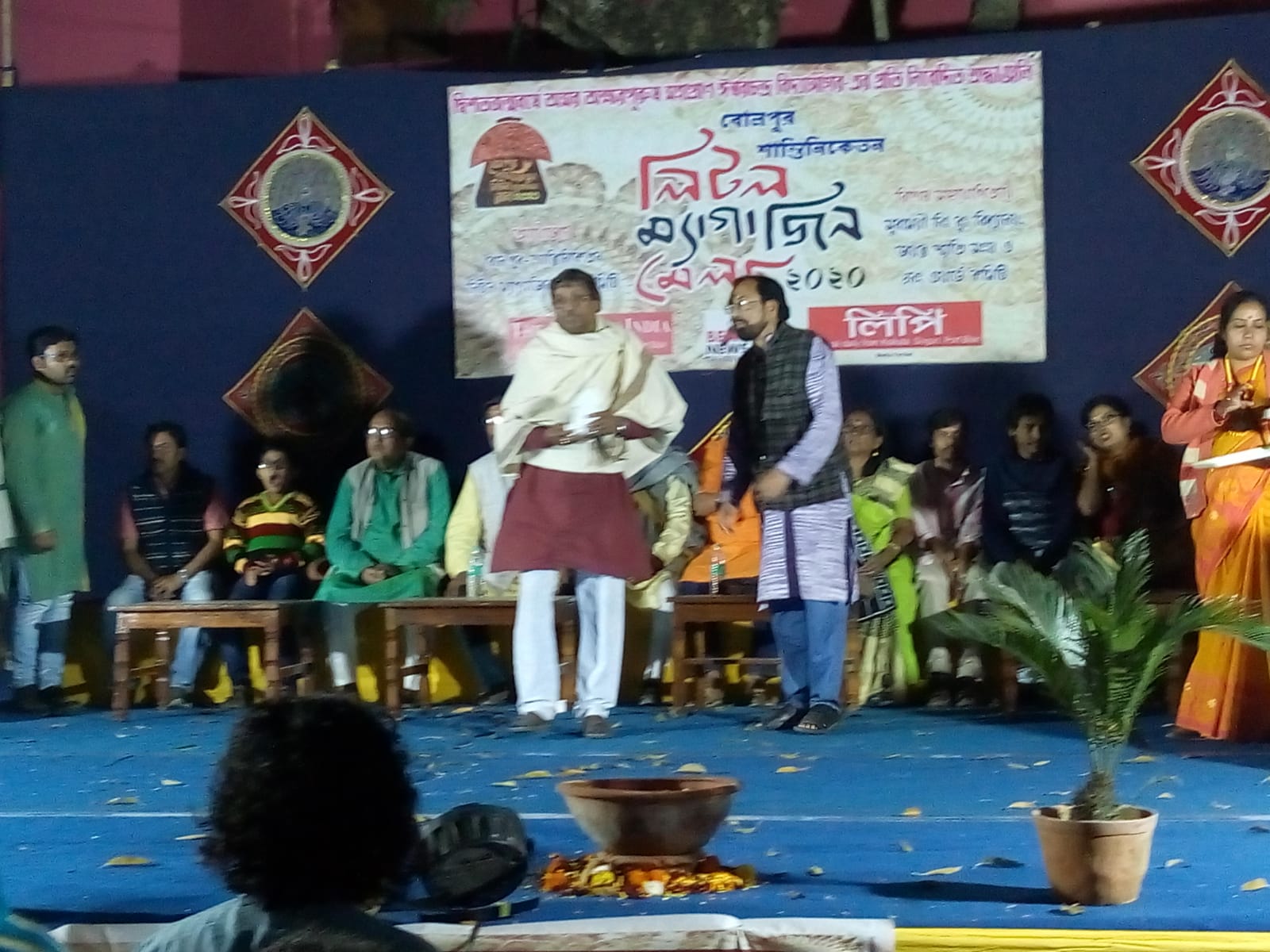
বোলপুর শান্তিনিকেতন লিটিল ম্যাগাজিন মেলা 2020 উপলক্ষে
” কুড়ুখ্ কাতথা ” পত্রিকার সম্পাদক
নিমাই কুমার সরদার মহাশয়কে সংবর্ধনা জ্ঞাপন।
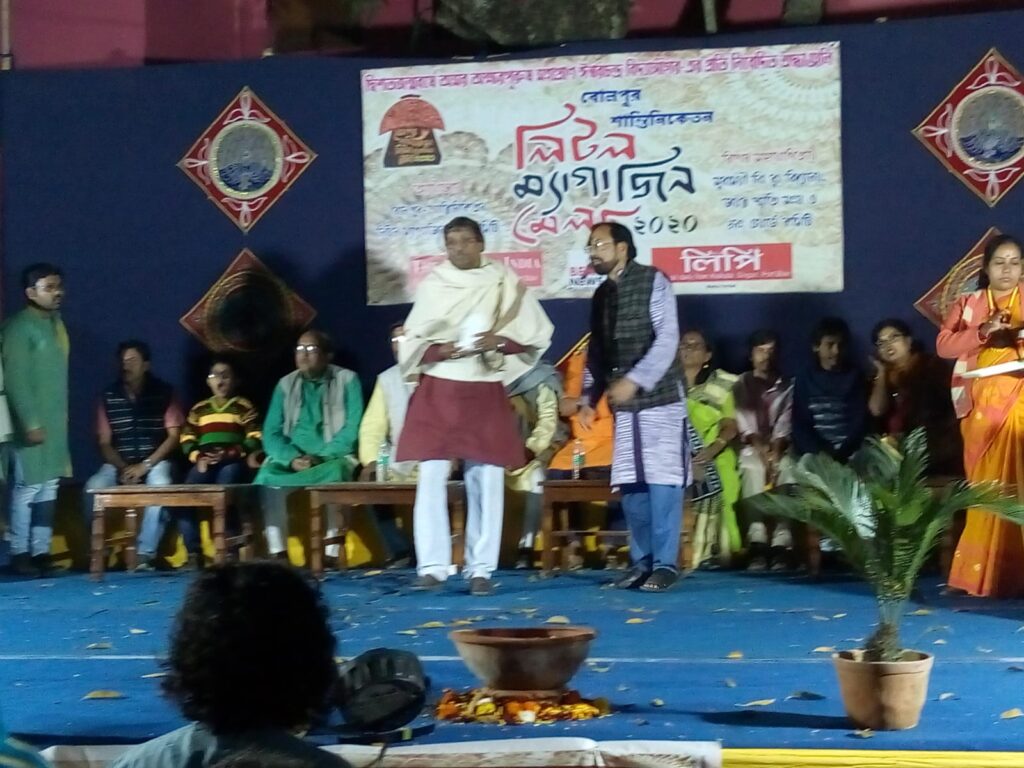
বোলপুর শান্তিনিকেতন লিটিল ম্যাগাজিন মেলা 2020 উপলক্ষে
” কুড়ুখ্ কাতথা ” পত্রিকার সম্পাদক
নিমাই কুমার সরদার মহাশয়কে সংবর্ধনা জ্ঞাপন।
Nimai Kumar Sardar
The Vedas, the Puranas, the Ramayana and the Mahabharat present for
specification about the people of ancient India. It is undeniable that the tribals took meja
role to develop the culture and civilization of this country. The Oraon culture and the
festivals like Karam, Jatra, Puna-Khani, Fagu, Soharai, Khaddi etc. and also their life and
livelihood are closely related with cultivation.
It is universally admitted from early times the Oraon tribes picked out the cultivation
as their main profession. As per historical fact the first cultivation started in 10000 B.C.
and subsequently appeared and discovered different civilization in India. Out of which the
civilization of Indus Valley in 3000-2000 B.C. considered as noble part to the historian
Though there are no historical record but as per Archaeological diagram the halls
discovered in the Harappa and Mohenjodaro are nothing but Oraon “DHUMKURIA
(Bachelor’s Dormitory) as per Jitu Oraon’s – ‘Sindhu Ghati Kurukh Sabhayata Janajatio
Bhumika’. The Kole, Bhill, Santal, Munda and Oraon tribes are an integral part of the
Indian civilization. It is known to us that there are four main races ( dialect families)
i) The Austro-Asiatics (Austric) are represented by Kols, Bhills,Santals, Mundas.
Koras etc.
i) The Indo-Mongoloid (Sino-Tibetan) are represented by Nagas, Kukis, Ravas,
Bodos, Mechs etc.
ii) The Dravidian dialect family members are Tamils, Telegus, Tulus, Maltos, Jatapus.
Konds, Kisans, Gonds, ORAONs etc.
iv) The Aryans – who are supposed to be the last to come to India.
Thus we see that the first three racial and cultural elements made a great contribution
to the formation of the Indian people. About the Dravidian tribe, namely, the Oraons, who
are also called Kurkher since their mother-language is Kurukh, their internal migration
perhaps starts from somewhere North-Western India to Southern India near Coorg in
Karnataka. Later the Oraons appear to have proceeded up the Narbada till they reach the
Sone valley. For a time, they appear to have live in places near Aramnagarh (Arra) and
Byaghra-Sara ( Buxar). Ultimately they took shelter in Ruidasgarh (Rohtasgarh).
Subsequently they moved North-Eastward and spread their habitation in West Bengal,
Assam and East Bengal ( at present Bangladesh). All those migrations happened due to
Geographical, Economical and Political reasons. This has reference to The Tribal Culture
of India of L.P.Vidyarthi and B.K.Rai).
There are forty castes marked as Schedule Tribe and Nine as their sub-divisional
tribe in West Bengal. They are Asur, Baiga, Bedia, Bhumij, Bhutia, Birhor, Birjia, Chakma,
Chero, Chik Baraik, Garo, Gond, Gorait, Hajang, Ho, Karmali, Kharwar, Khond, Kisan,
Kora, Korwa, Lepcha, Lodha, Lohar, Magh, Mahali, Mahli, Malpaharia, Mech, Mru,
Munda, Nagesia, ORAON, Parhaiya, Rabha, Santal, Sauria Paharia, Savar, Limbu and
Tamang. As per census of 2001 the population of santal-22,80,540, Oraon-6,17,138,
Munda-3,41,542, Bhumij-3,36,436, Kora-1,42,789 and all others are below the lac.
The Santals are in first position and second biggest tribe is Oraon. The Oraon population
shown as 6,17,138 is not correct. Due to ignorance and lack of education some of the
Oraon people introduce themselves as Kora, Dhangar, Mudi etc. for which their population
becomes smaller in number inspite of their genuine presence (about 15 lacs/1.5 Millions)
in the state of West Bengal.
The people of this community are deprived for a long time every where in all
respect. After 70 years of independence of our country (India) it is observed that the
people of Oraon communities are lagging behind in food-cloth-health-education as well as
in socio-economic condition. I invite all the Oraons of the world to be united in a platform
for upliftment of Kurukh language, development of their traditional culture and removal of
poverty of the people of this community.
Mr. Nimai Kumar Sardar (Minz)
President
Sara Bharat Oraon Kalyan Samity
निमाई कुमार सरदार (मिंज)
बोलपुर ( शांति निकेतन) पश्चिम बंगाल
खे़र चींखी घड़ी घड़ी अक्कु नुम मनो पईरी
होरमर नीम एजरा,
हरहुर्रा ख़द्दर चोअनर मदगी पेसा काआनर
धुन्धुर माखा़ मुंजरा।।
ई बेड़ा कुक्कोर उरुखनर अड्डो मेन्ता का:नर
अज्जी खेस्स पुखी,
पइरी पइरीम एम्बस नाल नु गोहला उइय्यस
अयो भेटांगो चुक्खी।।
टोंगए धरचस ददस कंके पलका केरास
सन्नी माई चींखी,
मण्डी एड़पा नु नासगो इरता लग्गी किसगो
दाई आसमा मुखी।।
खा़ड़ नु एमचस ख़ज्जरस अज्जोस टोंकन्ती किर्रीयस
नुड़का किचरी कुरियस,
लोटा नु अम्म होच्चस धरमे गुसन गोहरारस
पईरीन्ता बीड़ीन गोड़ लग्गियस
अड्डो खापुर किर्रोर अक्कुन लुरकुड़िया कालोर
टुड़ोर-पढ़ोर हेभरोर,
अजम चिहुट नानोर डक्टर इंजिनियर मानोर
कुँड़ुख भखान परदोर।।
—-०—-
সোনার তরী – রবীন্দ্রনাথ ঠাকুর
(কুড়ুখ ভাষায় অনূদিত – অনুবাদক – শ্রী নিমাই কুমার সরদার )
“গগনে গরজে মেঘ , ঘন বরষা ।
কূলে একা বসে আছি, নাহি ভরসা ।
রাশি রাশি ভারা ভারা ধান কাটা হল সারা,
ভরা নদী ক্ষুরধারা খরপরশা –
কাটিতে কাটিতে ধান এল বরষা ।।”
মেরখানু বাদালী হুরহুররী, ঘিচপিচ চেঁপুল্লা ।
ওথখান উক্কান রাঃদান ক্ষারভিতা, কাখানা মাল্লা ।
কুদহা কুদহা চিরকী চিরকী ক্ষেসসে ক্ষোয়ানআ মুঞ্জুরকী ।
উন্না ক্ষার নিদ্দিকা সুইতু এমসারচা –
ক্ষুইনু ক্ষুইনু ক্ষেসসে চেঁপ বারচা ।।
“একখানি ছোটো খেত , আমি একেলা –
চারি দিকে বাঁকা জল করিছে খেলা ।
পরপারে দেখি আঁকা তরুছায়ামসী -মাখা
গ্রামখানি মেঘে ঢাকা প্রভাতবেলা ।
এ পারেতে ছোট খেত , আমি একেলা ।।”
এন ওথখান, সান্নি ক্ষাল্লে অনটাতারা –
বেংকো আম্মে বিইচি হুরমিতারা ।
আ পিন্ডিনু এরদান টুকরা মান্নে একহে মহারো-মেশেরকা
পাইরীবারি বাদালি ডাবচা পাদদান ।
সান্নি ক্ষাল্লে ই পাকখা , এন ওথখান ।।
“গান গেয়ে তরী বেয়ে কে আসে পারে।
দেখে যেন মনে হয়, চিনি উহারে।
ভরা পালে চলে যায়, কোনাে দিকে নাহি চায়,
ঢেউগুলি নিরুপায় ভাঙে দু ধারে—
দেখে যেন মনে হয় চিনি উহারে।”
ডুঙ্গি অন্দরাকি ই পিণ্ডি নে বারনার ডাণ্ডি পাড়কান।
এরা কি এন্নে লাগ্নি, আসিন এন আখদান।
মেইয়া কালি নিদ্দিকা কিচিরি, একাতারাহু মালা ইরি,
হলকা আন্মে সসাগসম্মান ক্ষুট্টি দু পক্ষান—
এরা কি এন্নে লাগ্নি আসিন এন্ আদান।
“ওগাে, তুমি কোথা যাও কোন্ বিদেশে?
বারেক ভিড়াও তরী কূলেতে এসে।
যেয়াে যেথা যেতে চাও, যারে খুশি তারে দাও
শুধু তুমি নিয়ে যাও ক্ষণিক হেসে
আমার সােনার ধান কূলেতে এসে।”
আদা, নিন একসান কাদায় একা রাঃজিতারা?
কির ডুঙ্গি বারাকি অংহােন ক্ষারকুটিতারা।
এক্সন কালা বেদদোয় কালকে, নেকা রিঝ আরগি চিয়িকে
নিন্ নিদি হওয়া কালা উড়ুং আখাকি
এংহায় সােনালেখা খেস্যে ক্ষারভিতা বারআকি৷৷
“যত চাও তত লও তরণী-‘পরে।
আর আছে?— আর নাই, দিয়েছি ভরে।
এতকাল নদীকূলে যাহা লয়ে ছিনু ভুলে
সকলই দিলাম তুলে থরে বিথরে—
এখন আমারে লহাে করুণা করে।”
এ বায়ু নেদায় আদিন হওয়া ডুঙ্গি-নিদআকি।
আকু রায়ি ?– আকু মাল্লা, চিচ্চিকান সাজআকি।
ই উল্লা ক্ষার ভিতানু রাঃচকান এন্দরা মােধরকানু
হুরমীন লাদাচকান থােপ থােপ সেওতাচকান—
দায়া নানাকি আকুন হওয়া এংগান।
“ঠাই নাই, ঠাই নাই, ছােটো সে তরী
আমারি সােনার ধানে গিয়েছে ভরি।
শ্রাবণগগন ঘিরে ঘন মেঘ ঘুরে ফিরে,
শূন্য নদীর তীরে রহিনু পড়ি—
যাহা ছিল নিয়ে গেল সােনার তরী ৷৷”
আড্ডা মাল্লা, আড্ডা মাল্লা, আ ডুঙ্গি সান্নিপারা
এংহায় সােনা খেস্যেনু নিদদিয়া কেরা।
শাওন মেরখা কুরগারা রুম্বা বাদালী কিররা কিররা,
নিদি ক্ষার ভিতানু রাঃদান খাতিরকিম—
হচ্চা কেরা সােনাগি ডুঙ্গি রাঃচা ইন্দরিম।
_____________